
Mallorca’s east coast Porto Cristo and Manacor
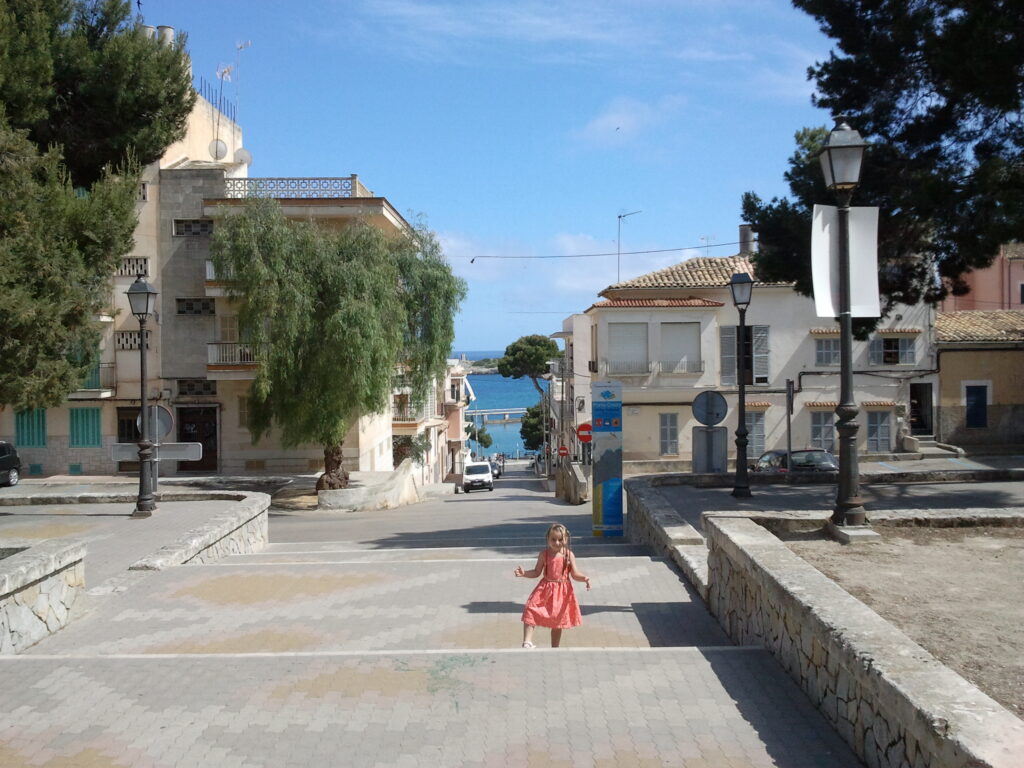
Porto Cristo is a quiet, authentic fishing village on Mallorca’s east coast, administratively part of Manacor. Known for its sheltered harbor and crystal-clear waters, the town offers a calm alternative to Mallorca’s resort-heavy north and south coasts. Key attractions include the spectacular Caves of Drach (Cuevas del Drach), featuring Europe’s largest underground lake, and the nearby Caves of the Hams (Coves dels Hams), famous for their unique stalactite formations. The town’s history dates back to 1260, with its name derived from a legend of a crucifix found on a fishing boat during a storm. It also holds significance in the Spanish Civil War, having been the site of a brief Republican landing in 1936.
Tennis legend Rafael Nadal has strong ties to this region, though his roots are deeper in Manacor. Nadal was born and raised in Manacor, where he still trains at the local Club Tenis Manacor and where his family home is located. In 2013, he purchased a 7,000-square-meter seaside plot in Porto Cristo, eventually building a modern, discreet villa designed by architect Tomeu Esteva after his 2019 wedding. The property, valued at around €4 million, features an infinity pool and direct sea access, reflecting Nadal’s preference for privacy and family life over flashy displays. He also berths his Sunreef Power catamaran in the local marina.
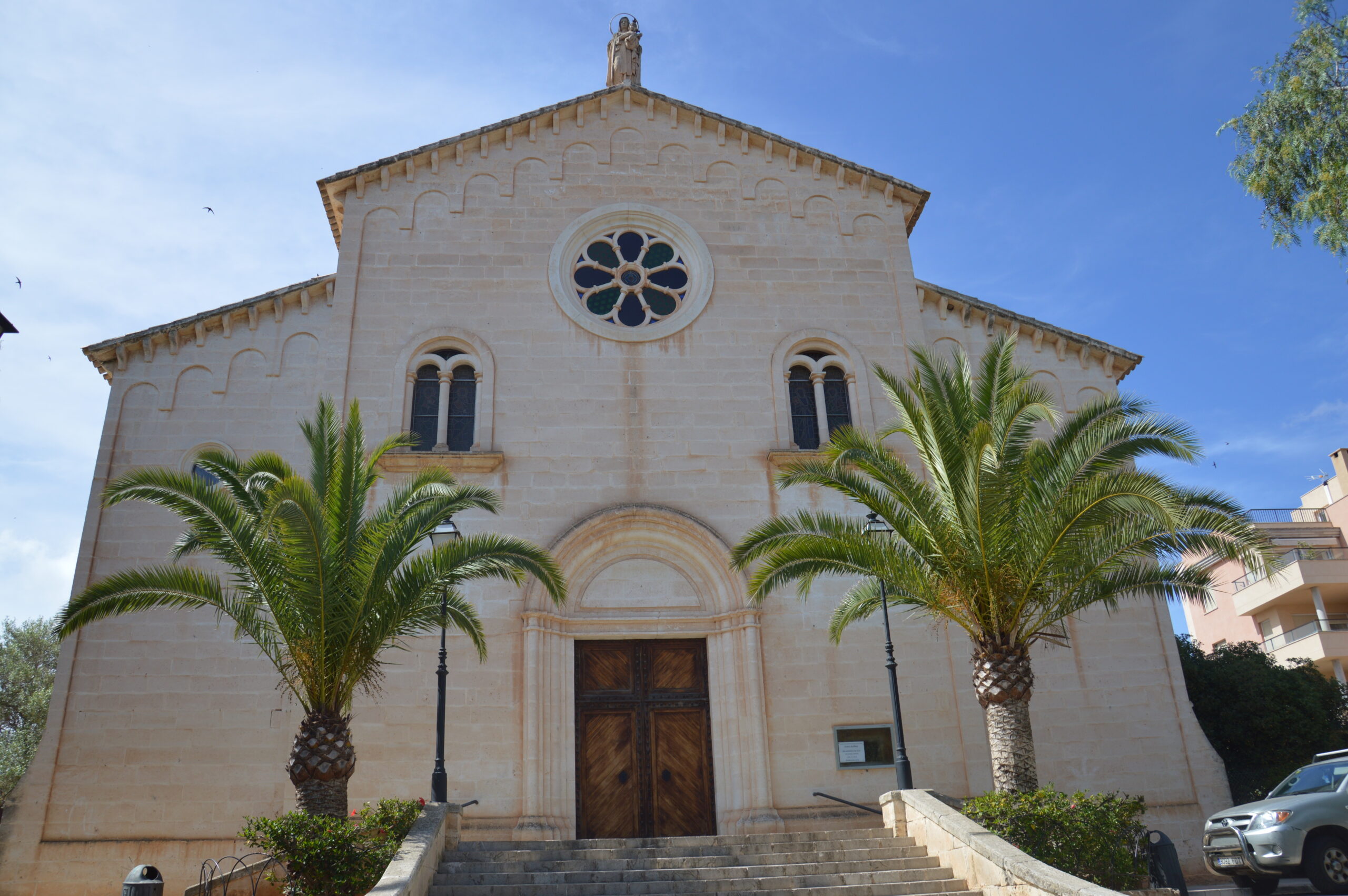
Manacor, the larger municipality to which Porto Cristo belongs, is culturally distinct for several reasons:
Pearl Industry: It is the global center for manufactured pearl production, home to Majorica, which offers factory tours and museum visits.
Tennis Legacy: The Rafa Nadal Academy by Movistar is located here, featuring over 40 courts and a museum dedicated to Nadal’s career.
Furniture Capital: The town is historically known as the “City of Furniture” due to its significant manufacturing industry.
Anecdote: Nadal famously retains his membership at the humble Club Tenis Manacor, often training on the clay courts there to maintain his connection to his roots, despite having access to world-class facilities elsewhere.
Name, History & the Civil War
The name Porto Cristo (“Port of Christ”) comes from a legend tied to the Catalan conquest of Mallorca in 1229–1231: a small fishing boat bearing a crucifix washed ashore in the harbor. The Christian invaders interpreted it as a divine sign and christened the port accordingly. For centuries it served as the outlet port for Manacor, the inland town whose produce was shipped from here.
Porto Cristo is the only place on all of Mallorca that saw active combat during the Spanish Civil War. On 16 August 1936, Captain Alberto Bayo led a force of roughly 8,000 Republican militia — mostly anarchist units from Barcelona — in an amphibious landing at Punta Amer and Porto Cristo. The Republicans briefly renamed the town “Porto Rojo” (Red Port).
Despite outnumbering the Nationalist garrison (around 1,200 regulars, 300 Guardia Civil, and Falangist volunteers), the advance stalled after pushing only about 12 km inland. The turning point came on 27 August, when Fascist Italian air support arrived, cutting down Republican bomber cover and enabling a devastating counterattack. The Republicans evacuated by 12 September, abandoning guns and equipment. The defeat at Mallorca, alongside Badajoz and Irún, marked a strategic turning point for the Republic.
The Caves of Drach (Coves del Drac)
The four connected caves — Cova Negra (Black Cave), Cova Blanca (White Cave), Cova de Lluís Salvador, and Cova dels Francesos (French Cave) — extend roughly 2.4 km to a depth of 25 m. The earliest written reference dates to 1338, in a letter from the island’s governor to the mayor of Manacor. The name “Drach” (dragon) first appears in 1632 in the chronicler Dameto’s Historia del Reino de Mallorca.
1878: Two travellers became lost inside for 30 hours, bringing the caves to public attention.
1880: German officer and entomologist Friedrich Will drew the first map, at the invitation of Archduke Ludwig Salvator, the Habsburg prince who championed Balearic science.
1896: French speleologist Édouard-Alfred Martel — considered the father of modern speleology — led an expedition that discovered the vast underground lake now called Llac Martel (about 115–170 m long, 30 m wide, 4–12 m deep), connected by hidden fissures to the Mediterranean. It is the largest navigable underground lake in Europe.
The tour ends with a short classical violin concert on the lake, performed on a small boat. A fun literary connection: Jules Verne referenced the caves in his 1896 novel Clovis Dardentor, describing them as “comparable with the most beautiful in the world, with their legendary lakes, their stalactite-filled vaults, their cool, limpid pools.”
Coves dels Hams (Fishhook Caves)
Discovered by chance on 2 March 1905 by local speleologist Pedro Caldentey Santandreu, who was actually digging for onyx when the rock gave way. The caves are named for their extraordinary helictites — stalactites and stalagmites whose tips curl like fishhooks (hams in Mallorcan Catalan).
Scientists still debate the exact mechanism, but the prevailing theory is that a draft of air pushes calcium-rich droplets sideways before they fall, depositing mineral in an unusual direction over thousands of years. The formations are estimated to be around 10 million years old.
A remarkable detail: when Caldentey opened the caves to the public in 1910, Porto Cristo itself still had no electricity. He generated the cave’s lighting with a watermill and dynamo of his own design. The caves also contain a striking underground lake called “Mar de Venècia” (Venice Sea), 30 m deep, with extraordinary acoustics.
Pearls, Furniture & the Women’s Strike
Manacor (population ~40,000) is the administrative capital of the region and the economic engine behind Porto Cristo.
Pearls & Majorica. The story begins with Eduard Hugo Heusch, a German engineer from Aachen, who in 1890 founded a factory in Paris to produce artificial pearls using a process of dipping glass beads in mother-of-pearl derived from fish scales. He relocated production to Mallorca, opening the first factory in Palma in 1902 and a second in Manacor the same year. By 1943, Majorica was the world’s leading producer of artificial pearls. The company’s history is inseparable from the women of Manacor: the factory’s work — selecting, threading, knotting, finishing — was done almost entirely by female workers, many of whom worked from home. In the early 20th century, Manacor’s pearl workers staged what is considered the first women’s strike in Spain, a landmark moment in the country’s labour history.
Furniture. From the mid-1800s, Manacor became known as the “Ciutat del Moble” (City of Furniture), leveraging local timber and skilled craftsmanship to build a major wood-processing industry. This sector sustained the town’s economy well into the 20th century, before tourism and the pearl industry reshaped it.
Town status. Manacor officially received the title of ciutat (city) in 1912.
Rafael Nadal, Anecdotes & Manacor Roots
The boy who ran toward the ball. Uncle Toni Nadal, a former amateur player turned coach at the Club Tenis Manacor, has a story he tells often: when Rafael was three years old, he would hit the ball to the little boy and, instead of waiting for it to arrive, Rafa would run toward it. “Normally, when I sent a ball to a small kid, he stood and waited until the ball arrived at him. But my nephew, he went looking for it. For me, this was special.”

Toni’s coaching was notoriously harsh. In his autobiography Rafa: My Story, Nadal wrote that he was not allowed to celebrate titles as a child and had to focus immediately on the next training session. His mother Ana María recalled how young Rafa would come home from training in tears but refuse to say why. Once he revealed Toni had called him a “mummy’s boy” (“niño de la mamá”). She wanted to confront her brother-in-law, but Rafa begged her not to, saying it would only “make things worse.” Nadal later admitted he was afraid of Toni and dreaded solo practice sessions. Toni, for his part, said: “I demanded a lot from Rafael because I cared a lot.”
Toni coached Nadal from age three until 2017 — a span of 27 years — and was in his corner for 16 of his 22 Grand Slam titles. In a 2025 interview, Toni reflected: “Many have asked me what the best moment I experienced with Rafael was. I was lucky to live through incredible moments, but nothing compares to the training days at the Manacor tennis club, trying to improve his backhand or his serve. We never quite managed to perfect the serve.”
The Nadal clan. Three generations of Nadals lived together — quite literally on top of each other — in an apartment block in Manacor. Uncle Miguel Ángel, a former professional footballer, gave Rafa his first taste of life under stadium lights. When floods ravaged Mallorca in 2018, Nadal put down his racket, grabbed a broom, and joined the local volunteers as just another resident helping clean up.
In a 2019 Nike commercial, Nadal said: “Manacor and Porto Cristo are my home. I have my family, all my friends since I was a kid. In Mallorca, here, we understand that family is a very important thing. I went to school from 9:00 AM to noon, and then from 3 to 5 PM [training].” In a 2026 interview with Bertín Osborne, he reflected: “I was very happy as a child. I didn’t want to grow up. I never wanted to move forward. I was very comfortable at the age I was. I liked being a kid.”
The Rafa Nadal Academy by Movistar, opened in 2016 in Manacor (with Roger Federer in attendance at the inauguration), features over 40 courts and combines tennis training with schooling. Since 2018, it also hosts the Rafa Nadal Open, an ATP Challenger event, keeping the town firmly on the tennis map.
About The Author


